Sunday, August 25, 2013

Pick up the new Baffler now: ten good reasons


Twenty-five years ago Tom Frank and friends started a small journal in Chicago called The Baffler.  Like his first book, The Conquest of Cool, the journal limned the many ways cultural authenticity has been co-opted, branded, and regurgitated by corporations and institutions.

There was a lot of subject matter to work with in Millennial capitalist America.  The magazine struggled, and even took a break for awhile.  But most of the early issues, some of which have been anthologized, stand up amazingly well.  If anything, the corporate onslaught has become even more refined and insidious. 

Recently The MIT Press picked up distribution of the journal.  The Baffler website has been spiffed up, its back on a three times a year publishing schedule, and the roster of contributors just keeps getting better.   There’s really nothing like it in the world of cultural and political long-form journalism.  And for twelve bucks!

The 25th anniversary edition of the magazine, just out, is fantastic.  I highly recommend that you stop reading this right now and go out and get yourself a copy and read that instead, cover to cover.  But if you need nudges, here are a few of the sacred cows smashed in this issue:

1)  In “Academy Fight Song,” Tom Frank shows “how virtually every aspect of the higher-ed dream has been colonized by monopolies, cartels, and other unrestrained predators.  The charmingly naïve American student is now a cash cow, and everyone has got a scheme for slicing off a porterhouse or two… ours is a generation that stood by gawking while a handful of parasites and billionaires smashed higher ed for their own benefit.”

2) “Facebook Feminism, Like it or Not” is a much needed takedown of Sheryl Sandberg’s phenomenally successful Lean In, by feminist scholar and journalist Susan Faludi.  “Never before have so many corporations joined a revolution,” Faludi writes.  “Virtually nothing is required of them- not even a financial contribution.”  The transcript of her attempt to get some questions answered by the Lean In PR department is sad and hilarious.  (Example: “Q: Would you encourage a Lean In Circle to picket a discriminatory employer?”  A: blah blah blah blah blah.)

3) In “Networking into the Abyss,” a pointed and genuinely Menckenesque critique of the altcult mecca South by Southwest, Jacob Silverstein efficiently eviscerates this trendy marketing event.  “During SXSW, Austin becomes a money-soaked mélange of hyper-consumerism and techno-utopianism… the marketing machine doesn’t only want to sell to you; it wants you to sell your own networked persona on its behalf.”
4) In “All LinkedIn with Nowhere to Go” Ann Friedman makes mince meat of the ubiquitous get-ahead site, and its philosophy of wish fulfillment as business model.  “The roots of the LinkedIn vision of prosperity-through-connectivity lie in the circular preachments of the positive-thinking industry,” she writes.

5) In “Street Legal: The National Security State comes Home,” Chris Bray makes a bone-chilling case that “the contest between the centralization and decentralization of information is the real culture war of our moment.”

6) The rise of the right-wing think tanks is explored in all its depressing glory in Jim Newell’s “Good Enough for Government Work: Conservatism in the Tank.”  “The perpetually aggrieved American right can rest easy: the conservative movement has, indeed, won the war of ideas.”

7) In part, as Ken Silverstein explains in “They Pretend to Think, We Pretend to Listen,” because of the corporate takeover of liberal think tanks!

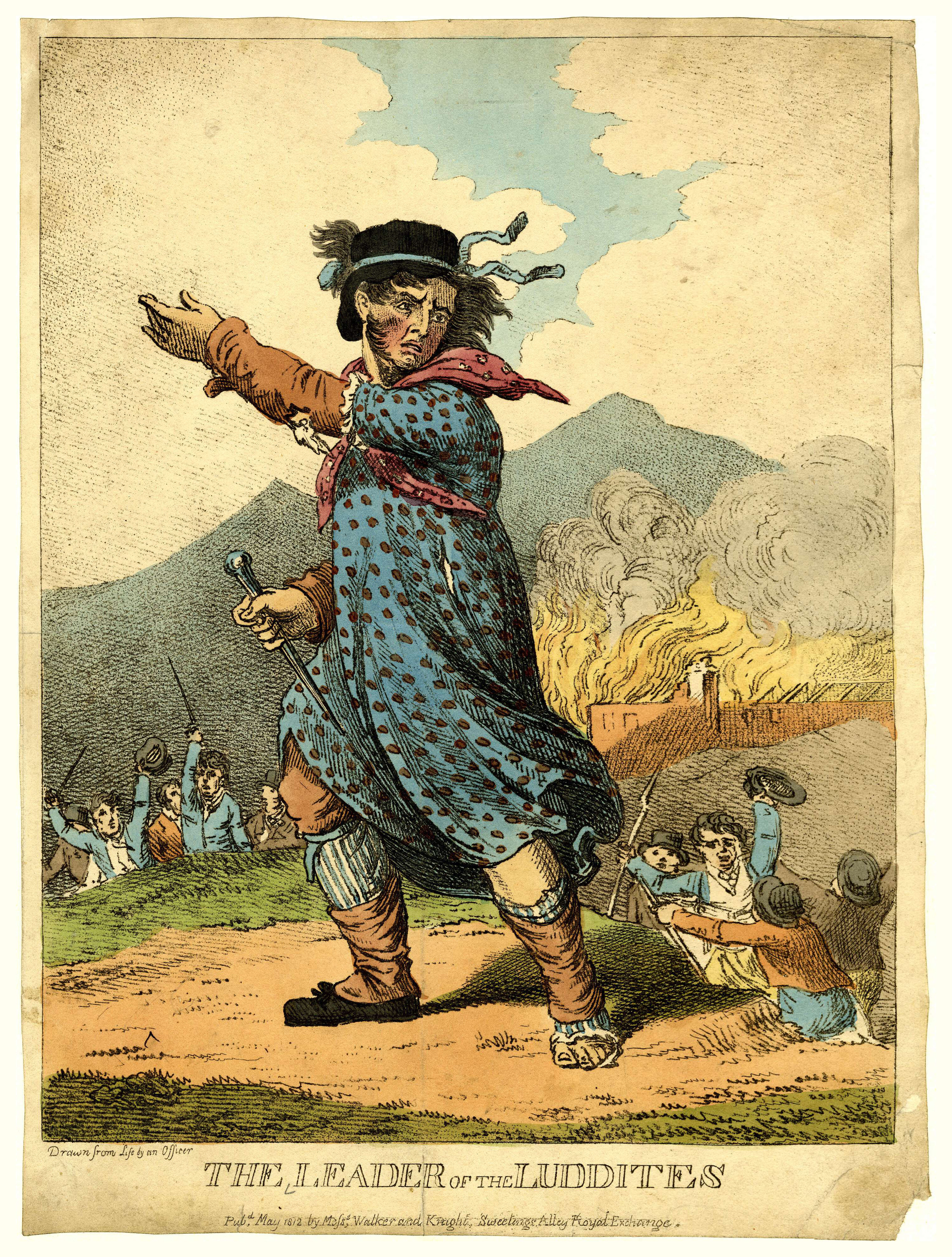
8) In “A Nod to Ned Ludd,” (worth the price of the magazine alone), Richard Byrne does a huge service by illuminating the true story behind a term we throw around as if we knew what it meant: “luddites.”  Just about everything you think it means is wrong.

9) “On Wittgenstein’s Steps” is a surprising and lovely rumination by Croatian writer Dubravka Ugresic on pigeons, sculptures, and the meaning of public monuments in a time of political transformation.

10) And in “Sacking Berlin,” Quinn Slobodian and Michelle Sterling mourn the disappearance of the whimsical, playful, authentic Berlin that emerged post-1989 and its replacement by “branding, clicking, swiping… a privatized Berlin.”  They lament that “the monuments of East Germany have been demolished, social services have been sold off, and with them have gone the memory of the city as a place of shared public goods.”

And there’s more!  Poetry, stories, cheeky graphics and cartoons, book and movie reviews- 162 pages that will make you laugh and make you a better person.  Inquire at your bookstore or see TheBaffler.com for more info.

Sunday, August 11, 2013

Hothouse blindspot


As I met with booksellers over the past few months, I kept hearing people talking about Boris Kachka's just-released history of Farrar Straus & Giroux, Hothouse.  It was an authentic case of a much-coveted phenomenon: bookseller buzz.

So there's a small irony in the fact that in this entertaining portrait of possibly the most consequential North American publisher, one big cog in the success machine is conspicuous by its near total absence: the booksellers.

Granted, the book is as much a Great Man biography as it is a history of a publishing company.  It's a Roger Straus warts and all wet kiss.  And granted, the process by which reps and booksellers decide how books will be represented and sold in stores is definitely not as sexy as the acquisitions soap operas, editorial meltdowns, and the quest for just the right pretty cover.

But it's very weird to see bookstores so willfully written out of a story which, one might argue, wouldn't be a story at all without them.

While the retail book landscape has changed significantly over the past six decades, you could argue that the bookstores were even more important in the forties, fifties and sixties, during which time some of FSG's bell-weather literary coups took place.  A mid-twentieth century reader probably bought books from an independent retail bookstore, (or a department store) who had been alerted to them by a sales force employed by the publisher.

Yet again and again in Hothouse, this happens in passive voice.  A book "sells," as if the act of bringing it into physical being was synonymous with publishing.  After conjuring the book,  customers somehow miraculously, automatically, find it and buy it.  (This is a misconception that is currently driving to despair gullible authors who have been seduced by the self-publishing siren.  It seems you have to figure out how to sell a book after you print it!)

I was a book buyer in a Midwest regional bookstore chain in the late eighties and nineties,  We had several excellent sales reps over the course of those years who sold us FSG books, including many of the success stories Kachka celebrates.  While a very small handful of titles became runaway bestsellers, for which we essentially had to just chase demand, the vast majority of new FSG titles each season were pored over and considered- book by book, catalog page by catalog page.

Each store knows generally what it can sell, sometimes drilling down to the specific customer level.  It knows its inventory situation, when the rent is due, whether the street will be under repair this fall, and hundreds of other factoids that go into the mix on deciding whether and how to get behind a book.

A key consideration was always the informed input of our reps.  They had often read the books, they knew our stores intimately, and, because they met with many other booksellers in that long ago pre-social media world, they could tell us how the book was being received in other stores.

The great FSG reps- I'm thinking here of Mark Gates, who inexplicably eludes Kachka's notice- could quite literally make a book happen by getting galleys into the hands of individual booksellers he knew personally, and checking back to see what they thought.  Much is made in Hothouse of the in-house staff enthusiasm for Jonathan Franzen's The Corrections, but In the lead up to that book I heard dozens of booksellers raving about it.  They may not have made the book on their own, but had it not lived up to the hype FSG envisioned for it, they certainly had the power to sink it by withholding enthusiasm.

This rep-bookseller component of successful book-making is not ancient history.  It's the way book buzz is created in 2013, as it was for Hothouse itself.  FSG and every other publisher that wants to be taken seriously sends reps to visit the 6,000 independent booksellers in North America, despite the fact that they represent a diminished percentage of actual book sales.  But buzz bubbles up from them..

Perhaps Boris Kachka was bored by the grunt work done by the peons of the book industry.  Like his references to books which magically "sell," the significant reviews he mentions simply "appear."  Surely an over-worked and underpaid marketing and publicity department gets some credit for patiently working the book media and preparing the ground for that nice front page New York Times Book Review rave.

It's odd that Kachka wouldn't appreciate booksellers as a kind of crucial punctuation mark on the story he has to tell.  Especially since in a recent New York magazine column, Tears for Goliath, he frets about whether a B&N dispute with his publisher will undercut his sales.  "The initial order on my book was bleak- less than 100 books for more than 600 stores- but improved, ironically, after the ABA touted the title."

Hothouse is a good story, if a bit breathlessly told.  It's well-worth reading if you're a book lover and keen on 20th century literary and publishing history.

But as my friend Ben McNally observed when I complained about the bookseller blindspot, "it's not at all uncommon for the Sherpas to be over-looked."


Monday, July 29, 2013

mayors who read, and managing my book flow


bookstores near the White House

President Obama goes to Amazon this week to sing its praises.  When he lived in Hyde Park he and his family spent hours in Seminary Coop Bookstore and 57th Street Books, and  I know he’s a book person.  So I wish he’d visit Politics & Prose or Busboys and Poets near the White House instead to shine the spotlight on true innovative heroes of local retail, rather than hyping this hideous mediocrity which eats small businesses for breakfast. 

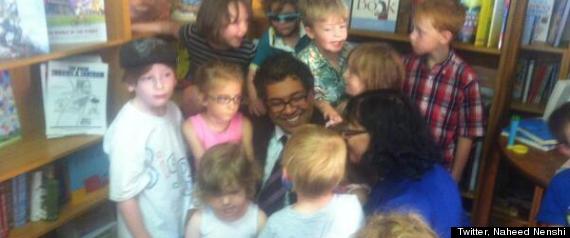
One of my favorite overheard conversations during my trip across western Canada last week happened at Page’s on Kensington in Calgary.  The recent hellacious floods were fresh on everyone’s minds, and when Mayor Naheed Nenshi walked into the bookstore with his entourage while I was browsing, it was no surprise that the subject quickly came up.

A woman told him that part of her library had been wiped out.  Nenshi grimaced and said with a shudder that he didn’t know what he’d do if he lost his book collection.  “I wouldn’t know how to start, but I guess it might be interesting to decide which books are really important to you.”


An ordinary conversation about a shared event, but I was struck with the clear impression that this man is a true book-lover.  Although his visit to the shop was part of some roving photo-op down Kensington, he was clearly at home in the bookshop, and the look of horror on his face as he pondered the loss of a personal library seemed completely genuine, a glimpse behind the political mask.

The encounter reminded me of my days managing a downtown Milwaukee bookstore and another reader politician.  City Hall was a few blocks away, and our gangly, wonky mayor would amble in at lunch hour a couple times a week.  He was not a glad-hander, and people tended to give him space to browse like a normal person.  He and his wife had wide and interesting reading tastes, and, without trying to score “support your local business” points, quietly supported us by buying lots of books.

How many mayors today frequent their local bookshops?  How many cities still have downtown bookshops worth frequenting near City Hall?


                   *          *          *          *          *          *          *          *          *


In advance of moving to a smaller space for the first time in 30 years, I’ve been on a personal library reduction project.  Happily, it’s not prompted by a natural disaster, but I agree with Mayor Nenshi that it’s very difficult to do triage on books that are and have been- let’s face it- my best friends.

Everyone has advice, but the most popular seems to be “trade one for one”- henceforth, every book I bring into the house has to be balanced by one going out.  But out where?  I have nothing against selling to used book dealers or donating to worthy causes, but it bothers me to think that some book with really special qualities will wind up in a jumble sale instead of finding the perfect reader match.

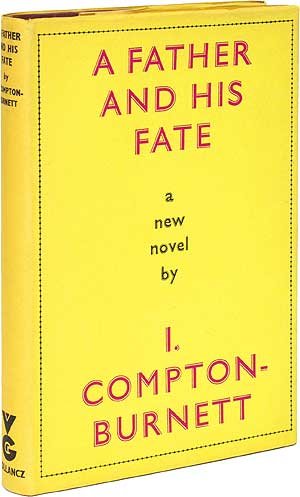
My neighbor Maria says she just gives away every book after she reads it, an elegant solution but not for me.  Others suggest cutting out topics in which I’ve lost interest.  But just picking up some of these books makes me interested all over again.  True, I could slim down by keeping just one edition by some of my pet authors.  Do I really need four copies of Ivy Compton-Burnett’s A Father & His Fate?  Apparently, yes.

Just as I’d finally gotten my head around the need to be ruthless in culling my shelves, I read The Pope’s Bookbinder,  a completely charming memoir by David Mason, the dean of Toronto antiquarian book dealers.  His sly humor and passion about the idea of collecting made me see my library as the personal achievement that it is, and to ease up on the discards.

I began to think that maybe all I really need do is to put a hold on acquiring new books until the move.  

 But even that resolve was demolished when I walked into the superb Edmonton Bookstore last week, one of the finest second hand book dealers I’ve ever seen.   

After an hour I walked out with:

-          an autographed copy of Tim Buck’s memoirs (and the fact that the name will mean nothing to you is simply evidence of the sorry state of the Left);

-           a harcover copy of Swamp Angel by another of my unknown writer obsessions, Ethel Wilson;


-          and- I kid you not- a copy of Ivy Compton-Burnett’s A Father & His Fate with a small note inside reading “Ethel Wilson’s copy.”  Sure enough, Wilson signed her name and the book is filled with her underlinings and marginal notes.  Perhaps she reviewed it, so now I’m on a quest for that.   

To appreciate the improbability of this coincidence, pick your two favorite obscure, out of print authors, who have no apparent connection with each other, and then imagine coming across one’s copy of the other’s book in a far-flung Canadian bookstore! 

Clearly, downsizing the book collection is not going to work.  Maybe the condo will accommodate more shelves after all.

Sunday, July 14, 2013

Karl Pohrt


Writing about Jonathan Lear’s poignant Radical Hope: Ethics in the Face of Cultural Devastation on January 1, 2000, Shaman Drum Bookstore founder Karl Pohrt called it “a wise book that illuminates human ingenuity and courage in the face of terrible vulnerability.”

Karl, who died last week, was a wise man who illuminated human ingenuity and courage in the face of terrible vulnerability.

To those book reps lucky enough to work with him, to the booksellers all over the world who were lucky enough to call him colleague, and to the readers and academics in the Ann Arbor community, the loss is hard to bear. 

This man was a bookselling dynamo who never let adversity- including the closing of his beloved Shaman Drum- diminish his enthusiasm for the next project.  For him books and life unspooled together, two sides of a möbius strip, and it was never clear where one started and the other ended.  His post-store travels and projects constitute a defiant NO to the gnawing away of literary culture, and an emphatic YES to the power of an individual to save books, reading and thinking itself.

By the time I began working for Harvard, MIT and Yale in 1998, Shaman Drum and Karl Pohrt were already nationally celebrated bookselling institutions.  But Karl treated our appointments with an astounding degree of humility and respect- for me, yes, but mainly for the books whose fate we were deciding.  There was something holy about the shrine-like store, and about our appointments- an unlikely description from a diehard atheist like me, but no other word fits.  He made sure others were at the table, that the collaborative qualities of bookselling were honored, but in the end this was several hours of communion with three wonderful lists of new titles each season.

“What you publish honors complexity,” he told me once- a high compliment.  Karl seemed to think that much of the world’s problems could be put down to either over-complicating the simple things, or over-simplifying the complex.  He valued books and people who got the balance right.

In a 2004 post, he described how he named his blog, There is No Gap:

A few years back I purchased a t-shirt with the message NO GAPS emblazoned on the front in sumi ink calligraphy. It is not an anti-globalization slogan attacking the Gap clothing chain—although I’ve no regrets if people think that’s what it means. Rather, it’s a statement about human possibility, about how we might conduct ourselves in the world if we were living optimally.

I bought the t-shirt at a Zen center in upstate New York, and the Roshi there talks occasionally about the tendency we have (especially those of us who can afford it) to back away from the intensity of life. A little of this is permissible of course, but the personal and social consequences of living at one remove from life too much of the time are ultimately disastrous. We can actually learn how to lean into the fire, the Roshi says. There shouldn’t be any gaps.

Ray McDaniel sent a note to the Shaman Drum Bookshop staff late this summer suggesting we consider what he calls entrance as opposed to escapist literature as a theme for our holiday catalog this year, and I choose to understand this as a different way of talking about the topic my t-shirt raises.

“What are those books that bring you closer to the world, make you more a part of it?” Ray asked.


Using books to enter rather than escape the world, ramping up the intensity, leaning in.  That’s Karl Pohrt.

Over the course of a decade’s meetings, during which we pored over thousands of new titles, trying to imagine customers for them in Ann Arbor, Karl’s own personal enthusiasms are most memorable to me. 

He adored Adina Hoffman’s vivid book on the poet Taha Muhammad Ali, My Happiness Bears No Relation to Happiness, and made it an Ann Arbor sensation.

John Marzluff’s In the Company of Crows and Ravens just tickled him- “crows are such tricksters you know!”

He loved to listen to the audio version of Borges' This Craft of Verse as a way to reduce stress- “it always improves my mood,” he said.

And in fifteen years I never saw him as excited as he became over Staring Back, the Chris Marker photography book MIT did in 2007.  He claimed to have seen La Jetée and Sans Soleil forty times, and I believe him.

This fall, we have a new title on the Harvard list that I know would have made him jump for joy:  The Falling Sky: Words of a Yanomami Shaman.  An autobiography by Davi Kopenawa that turns the tables on white researchers and anthropologizes them, it’s a fantastic and utterly original voice.  The book is big and challenging, both simple and complicated, and I have no doubt that Karl would be nodding his head gravely and brainstorming promotional possibilities for it- including how to get a Brazilian rain forest shaman to Ann Arbor. 

Eventually I will have to accept the reality that I can’t call Karl to gush about this book which I know he would love.  I will pitch it with extra heart to others, which is all I can do to salute him.  Though I know Karl’s aura will reverberate in the book world and beyond for years to come, right now his absence feels like a very big gap indeed.

Sunday, June 30, 2013

92 things booksellers said about our new fall books this month


Paul Ingram, Prairie Lights Iowa City (one of a dozen bookseller contributors to my sales call notes below)

Would she come to Milwaukee?
Love it but wish it were shorter.
Love it but wish it were cheaper.
Perfect.
Fantastic cover.
I hate that cover.
Why is he spending his time doing blurbs instead of finishing the third book in his trilogy I’ve been waiting for?
It’s a big year for Letters.
People just eat this kind of thing up.
My Science bookseller is salivating already over this.
Wow, I’d love to eavesdrop on their dinner conversation.
This guy is a workhorse.
“The Alexander Hamilton of China,” I love that.
This would be tough.
That explanation is really complicated and I don’t have time to use it on a customer.
Special Needs, Family/Parenting or Memoir/Biography?
This seems like just stating the obvious.
Looks more like a Nature book than Fiction.
Whoever’s idea that was to do these as flapped paperbacks, thank you!
Great package, great price, I can’t not take it.
So the kid’s name is Henry Adams?
The best cheat-proofing idea ever is the oral exam.
Anything about Nietzsche really works
Grim.
That author was just in the store last week!
These color catalog pages are really hard to write on.
Harvard should reprint that Foucault biography.
Kathryn Bigelow?  The Director? Really?
These sell really well when we face them out.
Huh!  Interesting…..
I’m mystified.  What should I do with this?
“Responsibility to one’s future self,” what an intriguing idea.
There’s no limit to the number of Proust translations we can handle.
God, another Proust translation?
Where would a book on the Danube go geographically?  Eastern or Western Europe section?
This could be huge!
A shame that’s such a bad discount.
That man is a good customer and a sweetheart.
That has front page New York Times Book Review written all over it.
We have monthly chamber music concerts in the shop.  This is perfect.
I already have too many picture books about penguins.
By November nobody will be talking about anything else.
Oh good, do you know Evil Men?
I just don’t think we have a customer for this [sigh]
I know the perfect customer for this.
Too historical.
Maybe Yale can break him out better than Cambridge could.
Clinicians just aren’t that interested in memoirs.
All the shrinks know their Shakespeare.
I just bought 1600 books on checkers from a collector!
Achebe, he’s a hero.
When a book works, it really works.
This is our kind of book.
We never really know what people are going to want.
Great subject but too bad about “American” in the subtitle.
That sounds a little like Rebecca Solnit.
Such an important argument, glad someone’s making it.
This just seems insanely wonderful.
I heard he had a falling out with Dennis Cooper!
I actually kind of like that cover.
Graffiti is so hot right now.
Gross!
I wish we had more interest in abstract expressionism.
Yes it’s a kimono but it has a bold, twenties, hip retro feel.
We can’t sell Matisse anymore, I don’t know why.
Good book design never hurts.
Oh I just hate to return a good book.
Last year was horrible, this year is great.
It’s a Bo Bardi year!
The more hardcore, the better for us.
Economics with an Asian flavor does really well.
Zizek is our most stolen philosopher.
Sounds quirky, we like that.
The tourists seem more interested in Starbucks than in buying a book.
I fear there’s less than meets the eye to this book.
$35 for 174 pages?
This cover doesn’t look like a book you’d want to read.
I love that the people he’s criticizing are our customers.
Excellent!  Marilynne Robinson is one!
Isn’t it a little premature to say the Surge worked?
He died so young!